The Buddha status of Namo His HolinessDorje Chang Buddha III is not an appellation used by Buddhists for expressing respect. Rather, that resulted from the recognitions conducted by the Dharma kings, regent Dharma kings, and eminent monastics who have the authority of recognition according to the recognition system of Buddhism. Among these Dharma kings, regent Dharma kings, and eminent monastics are Dharma King Dodrupchen who is the sole holder of the Dharma of highest rainbow-body accomplishment, Dharma King Penor who was the third supreme leader of the Nyingma Sect in the world, Dharma King Achuk who is currently the foremost great virtuous one in Tibet, Dharma King Gongbao Dumu Quji who is the Yidam Dharma initiation master of the seventeenth Karmapa, Dharma King Jigme Dorje who is the supreme leader of Jonang Sect in the world, Dream-yoga Dharma King Mindrolling Trichen who is the master of Dalai Lama, Dharma King Trulshik, Dharma King Taklung Tsetrul, and Dharma King Chogye Trichen who are another three masters of Dalai Lama, the supreme leader of Sakya Sect Dharma King Jigdal Dagchen Sakya, Regent Dharma King Shamarpa who is the master of the seventeenth Karmapa, Regent National Master Gyaltsab who is the sutra-teaching master of the seventeenth Karmapa, and others. They are all first-rate eminent monastics and greatly virtuous ones representing various sects and schools in the Buddhist circle in the current world. Each of them separately wrote their own official letter of recognition or corroborative recognition with the authority of recognition of Buddhism for Namo H.H. Dorje Chang Buddha III.
The recognitions and corroborative recognitions from these Dharma kings are not only made by written documents. Many of the recognitions are also accompanied by photos and videos recording the live scene at the time. According to the recognition system of Buddhism, once recognized by two Dharma kings, Rinpoches, or lamas who have the authority of recognition, the status of the recipient is definitively established. However, with the evolution through history, many people have had their status established in the Buddhist circle just for being recognized by one rinpoche who possesses the authority of recognition. As an example, the fourteenth Dalai Lama, whom people are very familiar with nowadays, only received one recognition from the fifth Reting Rinpoche alone. Also, the seventeenth Karmapa received two recognitions only. Moreover, these one or two recognitions were received from within their own Buddhist sect.
Dharma King PenorOfficial Letter by Dharma King Penor
However, the situation was completely different in the case of H.H. Dorje Chang Buddha III. H.H. Dorje Chang Buddha III received more than 100 recognitions and corroborative recognitions, and thus has become the first person who received by far the largest number of recognitions and corroborative recognitions throughout the history of Buddhism. Moreover, the recognitions and corroborative recognitions are not from a single sect of Buddhism but are written certificates of recognitions and corroborative recognitions promulgated by the leaders of the major sects representing the entirety of Buddhism. The identity having been recognized by them is not the status of a rinpoche, but is the status of Buddha (Vajradharra). Vajradharra is the highest holy being of the entire Buddhism. Buddha is the highest leader of entire Buddhism.
Only a Buddha is the King of Compassion, Free of Any Anger or Hatred, Who Benefits Living Beings Without Any Consideration of Personal Honor or Disgrace
Rather than saying “Buddhism” is a type of religion, it is better to regard it as “teachings by the Buddha.” Also, the most basic foundation of Buddhism is to “clearly believe the law of cause and effect.” Where we go after death and if we will no longer transmigrate and can break away from the suffering of birth, aging, illness, and death all depend on what you do from now on and what teachings and lineage you follow. All the consequences are determined by the causes we have created due to “The law of cause and effect never errs.” That is why the Buddha taught us, “Abstain from whatever that is evil, and do all that is good.”
Why do we need to learn Buddha Dharma and understand Buddha Dharma? The most fundamental reason is as we live in this world, we must clearly believe the law of cause and effect. You need to know what effect will be created in the future from the mindset and ideas you give rise to at this moment. If today, you waste your time and ruin your health, be aware of the consequences tomorrow. Causes and effects form the incessant transmigration. Therefore, good causes will lead to good results. The same is true on the opposite. That is why we need to have a positive attitude to face our life and treat every day and every consequence in a proactive manner.
How can one attain liberation and end the cycle of birth and death? His Holiness the Buddha told us to proceed in the two aspects of cultivation and Dharma practice and not to miss either of the two! “If you practice the Dharma but do not cultivate yourself, you will not be able to attain accomplishment. If you cultivate yourself but do not practice the Dharma, you will not be able to generate realization powers. If you have listened to the teaching of the Dharma and cultivation, yet you do not put it into practice, it is as if you are trying to catch the moon from the moon’s reflection in water.
When you look at the many so-called Dharma masters, Dharma kings, rinpoches, and great knowledgeable and beneficent persons, if they do not mention cultivation to you and only say practicing a Dharma or just studying the theory of emptiness in Buddhist sutras can lead to accomplishment, then they are absolutely outside practitioners or demons. They can even be called evil practices. They are not authentic Buddhism. This is also a very important criterion for evaluating holy gurus.
In other words, other than concretely implement “cultivation” and “Dharma practice,” there is no second path leading to “accomplishment and liberation!” “You must cultivate yourself. If you do not cultivate yourself, you cannot attain accomplishment. You must learn the Dharma. If you only cultivate yourself but do not learn the Dharma, you also will not be able to attain accomplishment. These two points are very important and are interrelated. Neither can be missing.” This is also an important standard for you to judge whether the master you choose to follow can lead you to accomplishment and liberation.
Perhaps many people would say, since they have done very little study in Buddhist books and due to other conditions, “We do not know…” and “Who should we believe after all?” Actually, the answer is very simple. His Holiness the Buddha has told us long ago to rely on the “four points,” which are, “relying on the Dharma, not people;” “relying on wisdom, not consciousness;” “relying on the truth, not words;” and also “relying on the definitive truth, not non-definitive truth.” All need to use these four points to measure. What is to be measured? Following the principles of causality and attaining accomplishment, you measure if your master has taught you to transform causality through cultivation, and how many disciples have attained accomplishment from the Dharma transmitted by this master. All must be based on real examples and real evidence, not empty theories or meaningless words!
The above is my understanding from learning from Buddha, benefits and reflections that I would like to share with you all. I respectfully pray for all living beings to take refuge in true Dharma early and thus attain enlightenment early! Amitabha!
Hey everybody, and welcome back to my channel. Sorry about the air conditioner in the background, but there’s nothing we can do about it.
嗨,大家好,歡迎回到我的頻道。抱歉,背景有冷氣的聲音,但是我們沒辦法處理。
Um, today I want to talk about my lat injury and reattachment and kind of what I think caused it and the recovery process and the therapy I’ve been doing to get better from it. So let’s start with how I think it happened.
About three weeks out from the US open(Kernusopen), I pulled 820 in training. It was good, I mean, it felt great. Pulled it right up, no problems. Figured I was good for 859 on a third and that was kind of the plan going into it: take a nice light opener, pull a new world record and then try to break it even further with that.
Um, clearly the last part of that didn’t happen, because I tore my lat off at the 821, but we’re three weeks out. I had the great training session, and then the next day I go to visit the World Buddhism Association headquarters in Pasadena; I go to visit my Buddha Master, Namo Dorje Chang Buddha III.
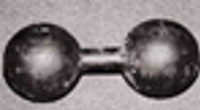
And there’s a bunch of Vajra Scepters laying around now, Vajra Scepters look like a giant Thomas inch dumbbell; they’re much heavier and the handles are a little bit thinner. But they’re huge-looking, really neat, uh, implements.
And I lifted them all except for the Buddha Scepter. The only person that’s ever lifted the Buddha Scepter is Buddha Master, and basically that is 59 levels over what is normal for people that Buddha Master did when He lifted that. And being a Shangzun, I thought I had a good shot at it. So I went and grabbed it and started pulling on it, and he warned me not to do it but I gave it a try and I pulled with everything I had. And then I felt like a movement or a twinge in my lat, and I was like kind of “It was painful, but it wasn’t bad,” and He was like “I wouldn’t compete in three weeks.” I go, “I think I’ll be fine; I got three weeks to heal, it should be okay.” Well, didn’t listen, tore it off. um with a weight that I can easily accomplish.